If you’re getting ready to sell your home, you’ve probably asked yourself:
Should I fix things up first, or just sell it as-is?
It’s a great question. Many homeowners assume the best way to get more money is to renovate to sell. But the truth is, not every upgrade pays off. In some cases, renovations can actually cost you more time, money, and stress than they’re worth.
So before you start planning projects, let’s take a step back and look at this the smart way: through return on investment (ROI) and risk.
Because the real question isn’t just “should I renovate before selling”, it’s:
Will these updates actually help me, or could they backfire?
Should I Renovate Before Selling? Start With the Big Picture
Before you spend a single dollar, think about your goals.
Ask yourself:
- Do I need to sell quickly?
- Do I want the highest possible price, or the easiest sale?
- Can I afford to pay for renovations upfront?
- How much time do I really have?
If your goal is speed and simplicity, renovations may not make sense. But if your home only needs small updates and you have time to invest, a few smart improvements might help.
The key is to treat your home like an investment, not a personal project.
The Biggest Risk: Over-Improving Your Home
One of the most common mistakes sellers make is called over-improving.
This happens when you spend more on upgrades than your local market can support.
What Does That Look Like?
- Installing high-end finishes in a mid-range neighborhood
- Doing a full kitchen remodel when buyers would be fine with simple updates
- Spending tens of thousands of dollars and only getting part of it back
Why It Matters
Buyers don’t care what you spent. They compare your home to others nearby.
If your home is priced too high because of upgrades:
- It may sit on the market longer
- You may need to lower your price
- You’ll keep paying holding costs (mortgage, taxes, insurance)
In short, over-improving can eat into your profit instead of increasing it.
Renovate to Sell: Upgrades That Actually Help
If you decide to renovate to sell, the smartest approach is usually not to do a huge remodel. In most cases, buyers are not expecting a perfect, luxury-level home. What they want is a property that feels clean, cared for, and easy to move into.
That is why the best pre-sale upgrades are usually the simple ones.
When homeowners start making improvements before listing, it is easy to get carried away. But if your goal is to sell, you should focus on updates that are:
- Affordable
- Fairly quick to complete
- Easy for most buyers to appreciate
- Likely to improve the way your home looks and feels right away
The goal is not to rebuild the house. The goal is to make it more appealing without spending more than you can reasonably expect to recover.
Here are some of the best updates to consider if you want to renovate to sell in a practical, cost-conscious way.
1. Fresh Paint
Fresh paint is one of the easiest and most effective improvements you can make before selling a home. It is relatively low-cost, does not usually take long, and can make a big visual difference almost immediately.
A freshly painted home often feels:
- Cleaner
- Brighter
- Newer
- Better maintained
That matters because buyers notice signs of wear right away. Scuffed walls, faded paint, bold colors, or patched areas can make a home feel older than it really is. Even if the house is in good condition overall, outdated paint colors or visible wall damage can distract buyers and make them focus on what needs work.
Fresh paint helps solve that problem.
Why fresh paint works when you renovate to sell
One of the biggest reasons paint works so well is that it helps buyers picture themselves living in the home. Strong colors, dark accent walls, or highly personal design choices can make it harder for people to imagine the space as their own. Neutral paint creates a blank slate.
It also photographs better for online listings. Since many buyers first see your home online, bright, neutral walls can help rooms look larger, cleaner, and more inviting in photos.
Best paint colors before selling
If you want to renovate to sell, stick with simple neutral shades such as:
- Soft white
- Warm beige
- Light gray
- Greige, or gray-beige
- Off-white
These colors tend to appeal to the widest group of buyers.
Should I paint every room before selling?
Not always. If your paint is already in good shape and the colors are neutral, you may not need to repaint everything. Focus on the areas that show the most wear or have colors that may turn buyers off.
A few touch-ups in the right places can go a long way.
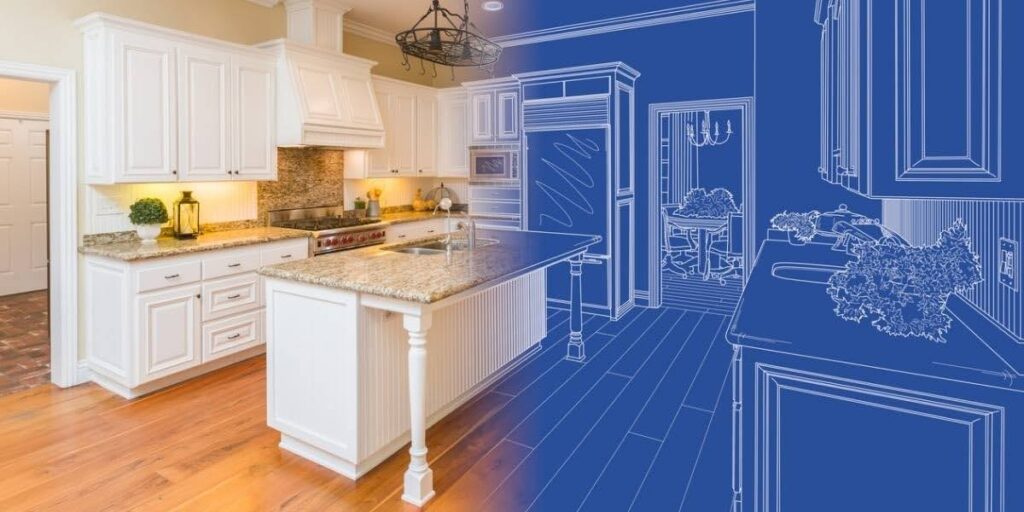
2. Minor Kitchen Updates
The kitchen is one of the first places buyers pay attention to. It is often seen as the heart of the home, so even small improvements here can make a strong impression.
The good news is that you do not need a full kitchen remodel to make the space feel more updated.
In fact, when homeowners renovate to sell, full kitchen renovations are often where they overspend. A better approach is to focus on minor upgrades that improve the look of the kitchen without taking on a major project.
Smart kitchen updates to consider
Simple kitchen improvements may include:
- Painting cabinets
- Refacing cabinet doors
- Updating cabinet handles and knobs
- Replacing an old faucet
- Swapping out outdated light fixtures
- Replacing worn countertops if they are visibly damaged or badly outdated
- Removing clutter from countertops
- Adding brighter lighting
These changes can make a kitchen feel fresher and more modern without the cost and disruption of a full remodel.
Why small kitchen updates matter
Buyers often notice whether a kitchen feels clean, functional, and well-cared for. Even if it is not brand new, a kitchen that looks bright and maintained can still leave a positive impression.
A minor update can also help take attention away from the fact that the home is not fully remodeled. That is important because many buyers are willing to accept a kitchen that is not perfect if it looks usable and clean from day one.
Should I replace all my kitchen appliances before selling?
Usually, only if they are very old, visibly damaged, or not working properly. If the appliances are clean and functional, replacing them may not offer enough return to justify the cost.
Is a full kitchen remodel worth it before selling?
Often, no. Unless the kitchen is in very poor condition, a full remodel can be expensive and may not bring back the full value you put into it. That is why minor kitchen updates are often a better strategy when you renovate to sell.
3. Bathroom Touch-Ups
Bathrooms matter to buyers, but just like kitchens, they do not need to be fully renovated to make a good impression. Small bathroom improvements can help the space feel cleaner, brighter, and more updated without requiring a major investment.
When buyers walk into a bathroom, they are usually looking for signs that it has been maintained. If it feels dingy, dark, or worn out, that can stand out quickly. On the other hand, a bathroom that feels fresh and functional can help the whole home show better.
Easy bathroom upgrades that can help
If you want to renovate to sell, some simple bathroom updates may include:
- Replacing old faucets
- Updating towel bars or hardware
- Installing better lighting
- Replacing an old mirror
- Repainting the vanity
- Regrouting tile
- Deep cleaning grout and caulk
- Replacing stained or worn caulking
- Updating a dated light fixture
These are not massive changes, but they can make the room feel much more cared for.
Why bathroom touch-ups work
Bathrooms are small spaces, which means even modest changes can have a noticeable impact. Better lighting can make the room feel brighter. Clean grout can make tile look newer. Updated hardware can make the space feel less dated.
Together, these improvements help buyers feel like the home has been maintained, which can build confidence.
Do I need to fully remodel my bathroom before selling?
In most cases, no. If everything works and the bathroom is reasonably clean and functional, small improvements are often enough. A full remodel may not be necessary unless the room has serious damage or very obvious issues.
4. Boosting Curb Appeal
Curb appeal matters more than many sellers realize. Before buyers ever walk through your front door, they are already forming an opinion based on how the outside of the home looks.
That first impression can shape how they feel about the entire property.
If the outside looks neglected, buyers may assume the inside has not been cared for either. But if the exterior looks neat and welcoming, they are more likely to start the showing with a positive mindset.
That is why curb appeal is one of the smartest areas to focus on when you renovate to sell.
Easy curb appeal updates
You do not need a full landscaping project to make the outside of your home look better. Often, basic cleanup makes the biggest difference.
Good curb appeal improvements may include:
- Mowing the lawn
- Trimming shrubs and bushes
- Pulling weeds
- Adding fresh mulch
- Planting simple flowers
- Pressure washing siding, sidewalks, and driveways
- Sweeping porches and entryways
- Painting or cleaning the front door
- Replacing an old mailbox
- Updating house numbers
- Making sure outdoor lighting works
These updates are usually affordable and can make the home feel more inviting right away.
Why curb appeal helps
Buyers often decide how excited they are about a home before they even step inside. A neat exterior suggests that the property has been cared for. It can also help your listing photos look better, especially the main exterior image that buyers see first online.
That first photo matters. If it does not catch attention, some buyers may never click on the listing.
Is curb appeal really that important if the inside looks great?
Yes. The outside sets expectations. Even if the inside is attractive, poor curb appeal can hurt interest before buyers ever get to that point.
5. Fixing Worn Flooring
Flooring has a major impact on how a home feels. Old, stained, damaged, or mismatched floors can make the whole property seem less updated and less cared for.
That is why flooring is another smart area to address if you plan to renovate to sell.
Flooring issues buyers notice quickly
Buyers often notice:
- Stained carpet
- Scratched hardwood
- Cracked tile
- Loose flooring
- Outdated materials
- Uneven transitions between rooms
Even if everything else looks good, bad flooring can become a distraction.
Flooring upgrades that can help
Depending on the condition of your floors, helpful updates may include:
- Replacing worn carpet
- Professionally cleaning the carpet if replacement is not needed
- Refinishing hardwood floors
- Replacing damaged planks
- Installing affordable modern flooring, such as luxury vinyl plank
- Repairing broken tile in visible areas
The goal is to make the flooring look clean, consistent, and move-in ready.
Why flooring improvements can pay off
Flooring covers a lot of visual space, so buyers notice it quickly. Updated or refreshed floors can make the home feel cleaner and more modern right away. It can also help connect different rooms and make the house feel more cohesive.
Should I install expensive flooring before selling?
Usually not. Unless your local market strongly supports higher-end finishes, it is often better to choose durable, attractive, mid-range materials. Overly expensive flooring may not deliver a strong return.
How to Decide Which Upgrades Are Worth It
If you are trying to renovate to sell, it helps to think strategically. Not every project deserves your time or money.
A good rule of thumb is to focus on updates that:
- Fix obvious wear and tear
- Improve first impressions
- Appeal to a wide range of buyers
- Are affordable compared to the potential benefit
It is also smart to ask:
- Will buyers notice this right away?
- Does this make the home feel cleaner or more updated?
- Am I solving a problem or just adding something extra?
- Is this upgrade likely to help me sell faster or more confidently?
If the answer is yes, it may be worth considering.
If the project is expensive, highly personal, or unlikely to matter much to buyers, it may not be the best use of your money.
Should I Renovate Every Part of My House Before Selling?
No. That is one of the biggest mistakes sellers make.
You do not need to update every room or make your home look brand new. Most buyers are not expecting perfection. They are looking for a home that feels well-maintained, comfortable, and ready for the next owner.
That means it is usually better to fix the most visible issues first instead of taking on a long list of major projects.
When homeowners ask, should I renovate before selling?, the best answer is often:
Do the simple things that improve appearance and reduce buyer concerns, but be careful not to overspend.
Renovations That Often Don’t Pay Off
Not every home upgrade is a smart move before you sell. In fact, some renovations can cost a lot of money, take weeks or months to finish, and still do very little to increase your final sale price.
That can be frustrating for homeowners. You may think you are making your home more appealing, but buyers do not always value those changes the same way you do. A project that feels impressive to you may not seem worth paying extra for to someone else.
This is especially important if your goal is to sell quickly, keep costs down, or avoid taking on more stress before moving. When that is the case, it helps to know which projects often bring more risk than reward.
Below are some of the most common renovations that often do not pay off before a sale.
1. Full Kitchen or Bathroom Remodels
Kitchens and bathrooms matter to buyers. There is no question about that. These are two of the most noticed spaces in a home, and outdated rooms can affect how buyers feel about the property.
But that does not mean you should automatically do a full remodel before listing your home.
A full kitchen or bathroom renovation is one of the most expensive updates you can make. It often involves demolition, plumbing, electrical work, new materials, contractor scheduling, and a long list of decisions. Even a “simple” remodel can grow into a bigger and more expensive project than expected.
The biggest problem is that you may not get that money back.
Here’s why full remodels often do not pay off:
- They cost a lot upfront
- They can uncover hidden issues behind walls or under floors
- They often take longer than planned
- Buyers may not love the finishes you chose
- The increase in sale price may be far less than the renovation cost
For example, you might spend a large amount updating cabinets, countertops, tile, lighting, and fixtures, only to find that buyers were perfectly happy with a clean, functional space. In that case, you may have spent thousands of dollars to create a look that did not change the sale outcome very much.
Another problem is personal taste. You may choose trendy cabinets, bold tile, or a certain countertop material because you think it looks great. But buyers may prefer something more neutral, or they may already be planning their own future remodel. That means your expensive update may not carry as much value as you hoped.
A common question sellers ask is:
Should I update my kitchen before selling?
Usually, a minor update makes more sense than a full remodel. Small improvements like painting cabinets, replacing hardware, updating light fixtures, or fixing broken items can freshen the room without the heavy cost of starting from scratch.
The same goes for bathrooms.
Should I remodel my bathroom before selling?
In most cases, no, not fully. A deep clean, fresh caulk, updated faucet, new mirror, or better lighting can improve the space without turning it into a large project.
If your kitchen or bathroom is badly damaged or no longer functional, that is different. But if it is simply older or not your style, a full remodel is often not the best use of money when you are preparing to sell.
2. Luxury Upgrades
Luxury finishes can look beautiful, but that does not mean they will increase your return.
This is where many sellers make a costly mistake. They assume that if they add expensive materials or high-end custom features, buyers will be willing to pay much more. Sometimes that happens in luxury markets, but in many everyday neighborhoods, it does not.
Examples of luxury upgrades that often do not pay off include:
- Marble countertops
- Custom cabinets
- Built-in wine storage
- High-end chef appliances
- Designer light fixtures
- Imported tile
- Premium smart home systems
These features may sound impressive, but buyers usually look at the home as a whole. They compare it to similar homes nearby, not to the amount of money you put into upgrades.
That means if your home is in a mid-range neighborhood, high-end finishes may not raise your value enough to cover what you spent.
This is often called over-improving your home.
Over-improving happens when you make your house nicer than what buyers in your market are expecting or willing to pay for. Even if the upgrades are high-quality, they may not fit the price range of the neighborhood.
For example, adding luxury stone surfaces, custom woodwork, and premium appliances to a home in an average neighborhood may make the house look nicer, but it will not always push the sale price high enough to match the investment.
A reader may ask:
Do luxury upgrades help sell a house faster?
Sometimes they can help the home stand out, but they do not always lead to better offers. In some cases, they may even make pricing harder because your home no longer matches nearby comparable properties.
Another common question is:
What if I want my house to look more modern?
That is understandable, and it can help. But there is a big difference between making a home look fresh and spending heavily on luxury details. Simple, clean, updated finishes usually go further than expensive custom features.
If you are selling soon, it is usually smarter to focus on broad appeal instead of high-end personal taste.
3. Major Additions
Adding more space to your home might sound like a great way to increase value. You may think a new bedroom, expanded living room, finished addition, or larger primary suite will make your home more attractive.
But before a sale, major additions are usually one of the riskiest renovation choices you can make.
Why? Because they are expensive, slow, and complicated.
Major additions often involve:
- Architectural planning
- Permits and inspections
- Foundation work
- Framing
- Roofing
- Electrical and plumbing changes
- Longer contractor timelines
- Higher risk of delays and cost overruns
These are not weekend projects. They often take months to finish and can easily go over budget.
And again, the biggest issue is return on investment.
Even if the new space looks great, there is no guarantee buyers will pay enough extra to cover the cost. In many cases, they will not.
A common question readers may have is:
Does adding square footage always increase home value?
Not always. More square footage can increase value, but the cost to add that space is often much higher than the actual amount you recover when you sell. Plus, buyers may not pay a premium if the addition feels awkward, out of place, or inconsistent with the rest of the home.
Another issue is timing.
If you are thinking about selling soon, a major addition can seriously delay your plans. Instead of listing your home in a few weeks, you may be stuck managing a project for months. During that time, you still have holding costs like your mortgage, taxes, insurance, and utilities.
That delay can matter a lot.
If the market changes while you are waiting for work to be finished, the value you hoped to gain may shrink or disappear. So even if the addition improves the home, it may still be a poor financial decision before a sale.
These projects usually make more sense for homeowners who plan to stay long-term and enjoy the added space themselves.
Why These Renovations Often Miss the Mark
When you are selling, the goal is not to create your dream home. The goal is to make a smart decision that helps you move forward.
That is why some big renovations miss the mark. They often:
- Cost more than expected
- Take longer than planned
- Create added stress before a move
- Appeal to only some buyers
- Do not increase the value enough to justify the investment
This is why many homeowners are better off skipping major renovation work and either making small cosmetic updates or selling the property as-is.
Should I Renovate Before Selling or Sell As-Is?
Now let’s talk strategy.
If your home needs a lot of work, or you just don’t want the hassle, selling as-is can be a very smart move.
Selling As-Is Makes Sense If You:
- Need to sell quickly
- Don’t want to spend money on repairs
- Own a rental property with tenants
- Live far away and can’t manage renovations
- Have a home that needs major updates
In these cases, trying to renovate to sell can create more problems than it solves.
The Real Cost of Renovating
Renovations aren’t just about materials and labor.
You also need to think about:
- Mortgage payments while work is being done
- Property taxes and insurance
- Delays from contractors
- Unexpected repairs
- Market changes
All of this adds risk.
If the market shifts or your project takes longer than expected, your potential profit can disappear quickly.
A Smarter Alternative: Selling As-Is
For many homeowners, selling as-is isn’t giving up: it’s making a smart, low-risk decision.
Companies like Golex Properties LLC make this process simple.
- Skip repairs and upgrades
- Avoid cleaning and staging
- Pay no commissions or hidden fees
- Close quickly: sometimes in as little as a week
- Even sell with tenants in place
Instead of spending time and money trying to renovate to sell, you can move forward with a clear and predictable outcome.
Final Thoughts: Renovate to Sell or Keep It Simple?
Choosing whether to renovate to sell comes down to one thing: what makes the most sense for your situation.
If you can make a few simple updates with a clear return, renovation may be worth it. But if the costs, time, and risk start to add up, renovating may not be the best move.
If you want to avoid the stress, cost, and uncertainty of renovations, Golex Properties LLC offers a simple solution.
You can sell your home as-is, skip the upgrades, and close on your timeline, without commissions or hidden fees.
Contact Golex Properties today to get a no-obligation cash offer and move forward with confidence.